

More than a decade has passed since the Emursive theater troupe converted a warehouse space in Chelsea’s art gallery district into a multi-floor space for the immersive theatrical production Sleep No More. That riff on Macbeth and noir detective stories let audiences wander about the performing arena, following actor/dancers acting out mostly dialogue-free scenes or just strolling through the carefully curated rooms for fun/macabre props or clues about goings-on where something wicked was certainly this way coming. That show, set to close sometime this fall amid dueling lawsuits between the company and its landlord, was an innovative marker for a different approach to theater — one emphasizing stagecraft and nimble performers over more basic elements like plot and characterization.
Emursive has returned with a new, equally elaborate site-specific production called Life and Trust, set on five-plus subterranean floors of 20 Exchange Place, a 57-story now-residential tower just off Wall Street that was originally home to the City Bank–Farmers Trust Company. You enter into the old bank hall, which operates during the day as the Conwell Coffee Shop where servers pour beverages (including tasty cocktails) from behind the teller windows. It’s a wonderful Art Deco space, with a brand-new WPA-style mural behind the marble counter/bar, and all the clocks are set to 10:23. At some point, someone in period dress approaches your table and ushers you into a back room to meet J.G. Conwell, the proprietor of the fictional Life and Trust Bank, who reveals that the date is the already-foreshadowed October 23, 1929, and that his financial institution is about to collapse amid the great stock market crash. But when an otherworldly woman appears to offer him one last chance to reclaim his youth, he takes it — and invites us to come along for the ride. And then we’re off, chasing a 20ish version of Conwell (Parker Murphy at my performance) as he cavorts with lovers (both male and female), gets into a boxing match in a gravel-floored barn amid wooden barrels, and meets dozens of other characters.
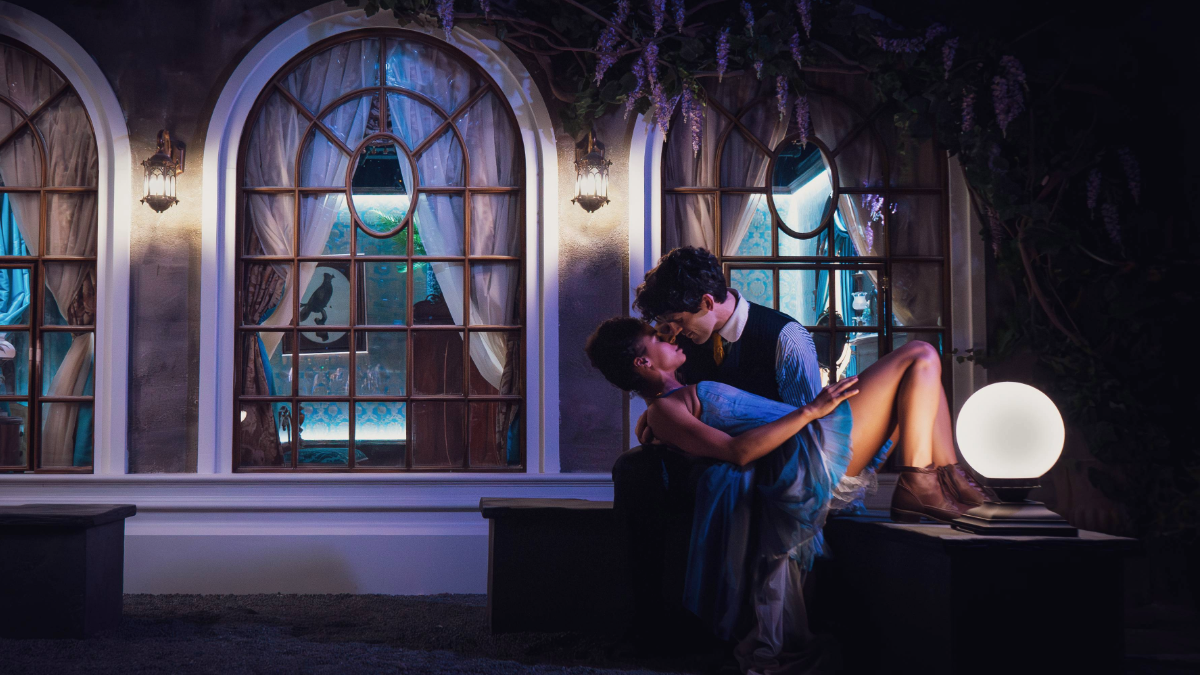
As with Sleep No More, there’s a choose-your-own-adventure quality to the evening. You can follow one character, or redirect your attention to another (which may be easier if they’re using an exit that closer to you at the time). You can also explore the space room by room, the better to appreciate Gabriel Hainer Evansohn’s incredibly detailed scenic design — which re-creates turn-of-the-20th-century mainstays like vaudeville theaters, carnivals, tenement houses, pharmacies, grand ballrooms, and jails. (There are wonderful surprises, too, like an otherworldly garden with glowing-neon flowers and a cushiony carpet underfoot as well as a room filled with stuffed poodles.) However you choose to participate, know that you may be chasing a performer up or down several flights of stairs at a decent clip to get to their next staged scene — you might want to skip your usual cardio routine that day, and definitely wear comfortable shoes.
The press notes suggest that nearly all of the characters are based on real people, including notorious figures like architect Stanford White and actress Evelyn Nesbit (who were two sides of a love triangle that turned murderous). But since there’s no Playbill, and no dialogue, it’s fruitless to determine who’s who, or exactly how their connected. While the carefully choreographed scenes do repeat a couple times during the night, there’s no possible way to see all of them. Not that you’ll miss anything in terms of a conventional plot.
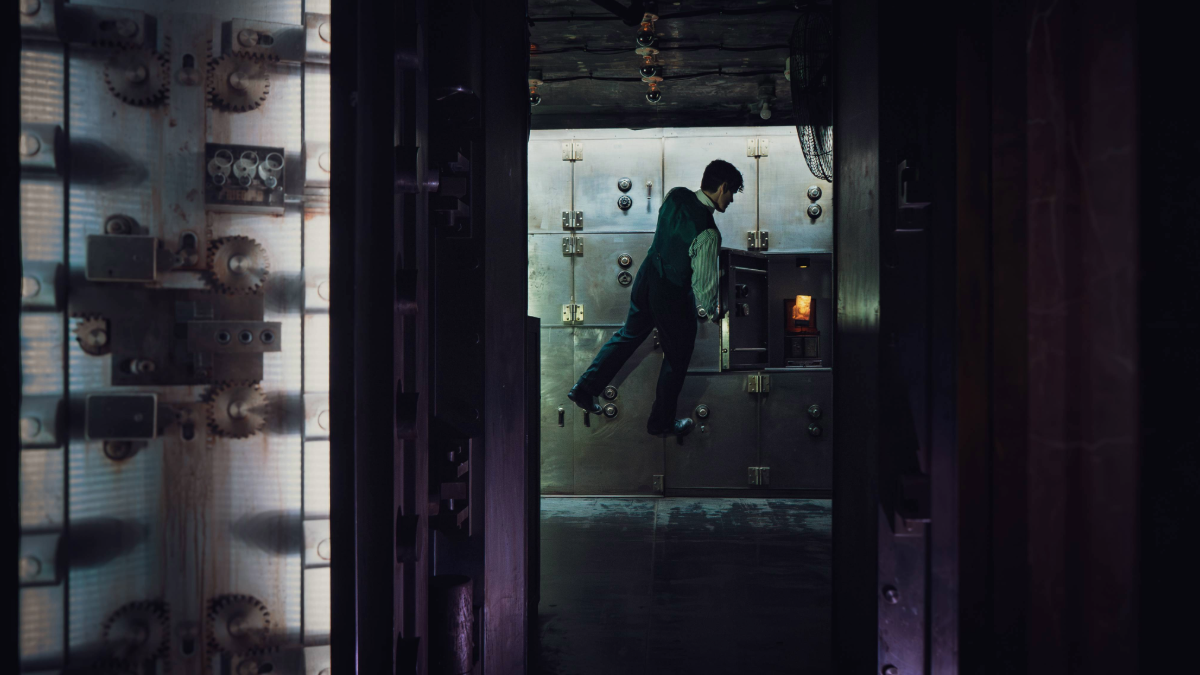
The best that can be said is that the story (credited to Jon Ronson) involves riffs on Faust, The Picture of Dorian Gray, The Red Shoes and other cautionary tales about humans tempted by underworld forces to exchange their souls for some earthly reward, however fleeting. These are expressed in a series of episodes and brief dance pieces. You might see a cop practice self-flagellation and then pour a glass of milk on his head, or two women engage in a sexy pas de deux in a backstage area of a theater, an apothecary mixing up a bright green syrup that others seem to prize for its medicinal/narcotic effects, or two men hold each other up with their hands as their feet climb the opposite walls of an Egyptian-style tomb. (The expressive and often athletic choreography is by Jeff and Rick Kuperman, who staged that visceral rumble of rival teenage gangs in this year’s Tony winner, The Outsiders.) Occasionally, much of the cast will gather in a single space — like the sumptuously appointed ballroom — for a group number that is visually stimulating despite remaining narratively opaque.
After about two hours of theatrical spelunking, the audience is led to a larger, double-heighted space for the percussive and kinetic finale where Coswell meets his expected fate. As with the elaborate ballroom scenes, it’s an exciting but anticlimactic end. Is that all there is? What are we supposed to take away from this immersive experience, aside from tired feet and the black plastic mask that all audience members wear to distinguish themselves from the performers? It’s hard to escape a certain FOMO feeling about all the scenes you didn’t see and whether they might have provided some longed-for clarity or exposition. The show is suggestive of early-20th-century New York and the roaring ’20s without actually teaching us anything about the period or its people.
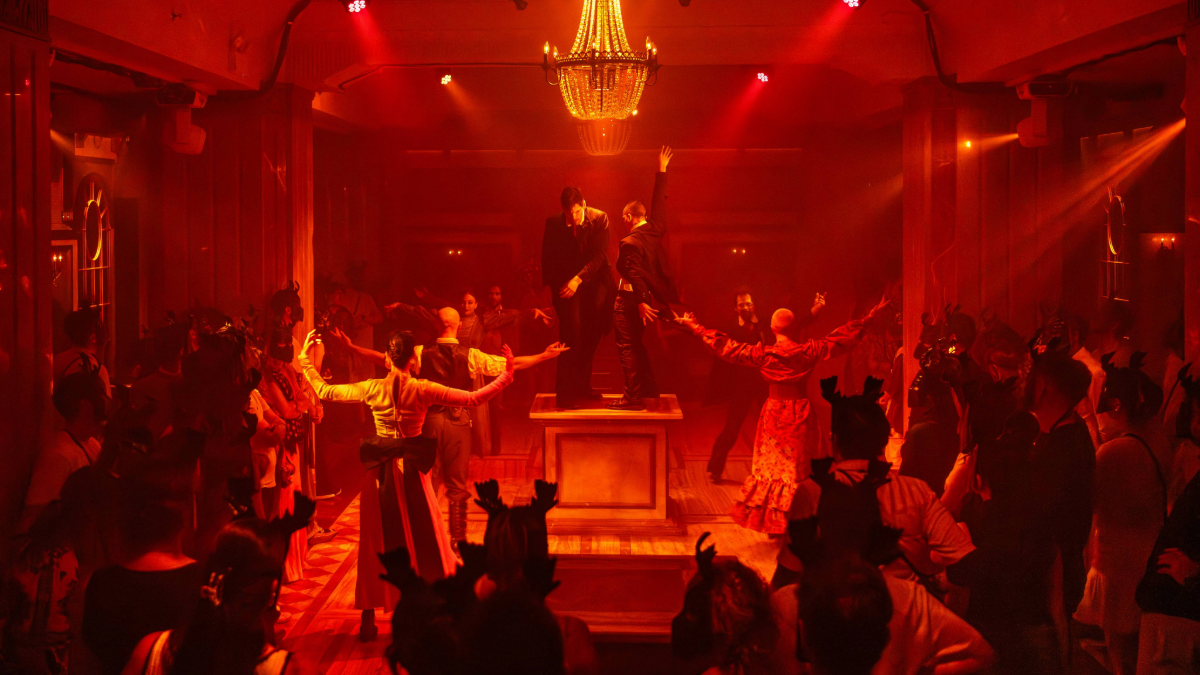
Without the framework of a single work like Macbeth underpinning the production, Life and Trust falls strangely flat as a work of immersive theater. There is no story to follow, no characters for us to identify with or care about, and we as an audience are never implicated in the proceedings in a way that would engage us beyond the surface level. But the surface pleasures are considerable here, from Evansohn’s fussily designed sets to Emilio Sosa’s period costumes to Jeanette Yew’s carefully timed lighting.
The sadly uncredited cast is a hard-working troupe that exerts itself impressively in tight spaces (sometimes gently nudging theatergoers out of the way to complete a move) and never seems to take a break during the nearly three-hour run of the show. The logistics of the operation alone are a marvel — credit to director Teddy Bergman, along with “experience direction” by Evansohn, for insuring that performers place themselves in the right location in the right time across five-plus floors of performing spaces.
In many ways, Life and Trust seems more rooted in today’s big-money, image-first Wall Street than in any depraved century-old past. It’s a triumph of appearance, and logistics, above all else.
LIFE AND TRUST
Conwell Tower, Off Broadway
Running time: 3 hours (no intermission, wear comfortable shoes)
Tickets on sale through Nov. 10
 Culture Sauce