
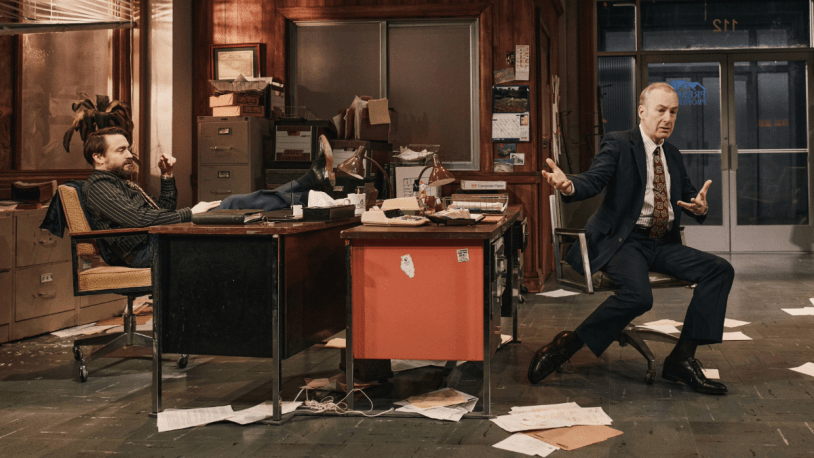
The Chicago salesmen cursing and scheming in David Mamet’s 1983 drama Glengarry Glen Ross are just as small (and petty) as ever but, to invert the words of Norma Desmond in Sunset Boulevard, it’s the picture that’s gotten big. In the case of the starry but uneven new revival at the cavernous Palace Theatre, very big indeed. You could hold a wedding banquet for 200 or so in the Chinese restaurant where the three-scene first act unfolds, as our property-peddling antiheroes alternately bounce and squirm while seated in plush red-leather banquettes lovingly designed by Scott Pask — or in the fluorescent-lit office of the second act, with its mismatched desks and chairs placed just-so to suggest the right amount of dinginess.
Patrick Marber’s production is missing more than just a sense of claustrophobic intimacy, though. Perhaps because of the plus-size venue, or because Mamet’s play has become a staple for acting classes and audition monologues over the years, the talented cast seems to be playing bigger and broader than ever. These are juicy roles and Mamet’s rat-a-tat, profanity-strewn dialogue holds a natural appeal for actors — and for audiences too, judging from the spontaneous bursts of applause following certain foul-mouthed tirades or door slams. But the sitcommish approach also disrupts the natural rhythm and seriousness at the heart of the story.
Kieran Culkin, fresh from playing goofball Roman Roy in Succession (and his Oscar-winning turn as a brash ne’er-do-well in A Real Pain), brings a Roman-like energy to Ricky Roma, the top salesman in the Chicago office who’s thisclose to hitting a monthly sales target that will net him a new Cadillac. He’s less of a bullying aggressor like Al Pacino, Liev Schreiber, Bobby Cannavale and other previous Rickys, preferring to lean back with an almost casual indifference when pitching his dubious investment opportunities to a seemingly in-over-his-head bumpkin (John Pirruccello, nicely understated). Culkin’s off-kilter line readings suggest an alternate form of alpha-male dominance, one that relies on projecting an authority that his marks can only hope to emulate. But I’m not sure that’s the Ricky that Mamet envisioned, or one that works for his critique of late-20th-century capitalism and its underlying Darwinist cruelty.
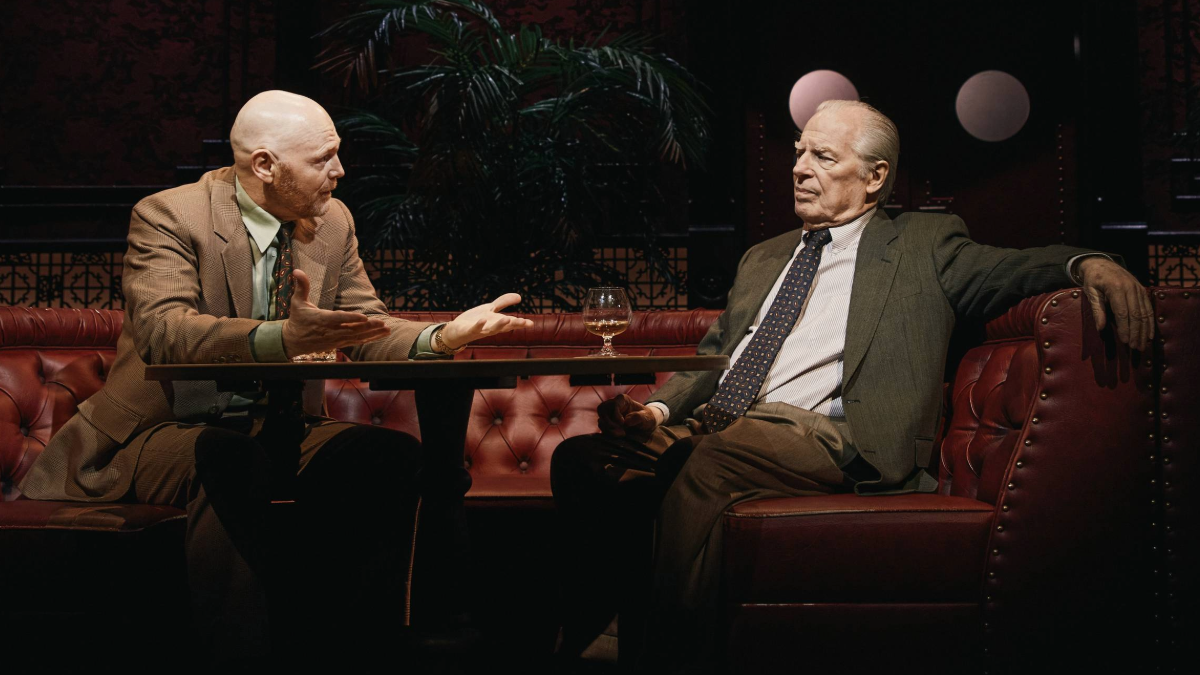
As a latter-day Willy Loman named Shelley Levene who fears that his recent losing streak with would-be investors may finally get him sacked, Bob Odenkirk goes broad — arguably too broad for a man that we’re told is sapped of enough energy to close a desk drawer, let alone a sale. (He blames the sorry crop of leads he’s been handed, the coveted contact sheets of potential victims that the team must cold-call to induce into their investment schemes.) Bill Burr, a veteran standup comic who (like Odenkirk) is making his Broadway debut, nails the hair-trigger hotheadedness of Dave Moss, the distant runner-up to Roma on the sales team who’s willing to contemplate dirty (and criminal) tricks to get ahead. The real standout here is Michael McKean as George Aaronow, another old-timer so beaten down by his colleagues and his life that despair emanates from him like cheap cologne.
Mamet, writing in the first Reagan administration, identified the origins of what we would now call toxic masculinity — a certain greed-is-good ethos where survivalist ends justify ethically dubious means, and where misogyny and racism toward “Polacks” and Indian families (“Patels”) are accepted without even a second glance. While Marber has intriguingly cast a Black actor (Donald Webber Jr.) as the office manager, John Williamson, the show doesn’t explore this dynamic in any discernible way. Williamson’s race is less of a factor than his status as a nepo baby, the nephew of some higher-up executive in an unseen home office — one who bungles Roma’s pitch to his skittish client but who’s also savvy enough to catch another member of his team in a telling lie.
Theatergoers only familiar with the 1992 film adaptation may be disappointed at the absence of the famous “Always be closing” monologue delivered by the unnamed company’s nationwide sales champ to motivate the Chicago office and set the stakes for a brutal competition that will reward the top performer with a car and send underperformers to the unemployment line. Alec Baldwin made such a memorable impression in the onscreen role, not least for dropping the F-bomb with Tarantinoesque frequency, that it’s a wonder that Mamet didn’t work the character and the speech into the stage script — much as the last few revivals of Grease incorporated movie-originated hits like “You’re the One That I Want.”
Culkin’s Roma briefly references the “Always be closing” mantra toward the end of the show, a kind of callback to old salesmanship practices that were already beginning to feel obsolete by the early 1980s when the show is set. But this production is stronger on the verbal fireworks than it is on quiet moments, the ones that ask us to ponder the fairness of asking experienced workers like Levene to ply their trade with tools that even the bosses know are sub-par and unlikely to yield results. That’s the tragedy of Glengarry Glen Ross, a still relevant message about basic unfairness in business, but it’s hard to discern in a production that mostly prizes coarseness and over-the-top performances. ★★★☆☆
GLENGARRY GLEN ROSS
Palace Theatre, Broadway
Running time: 1 hour, 45 minutes (with 1 intermission)
Tickets on sale through June 28 for $162 to $825
 Culture Sauce