
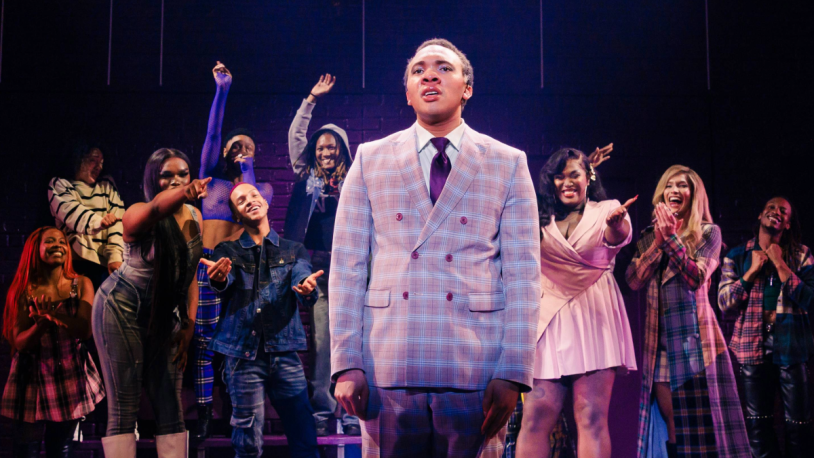
The teen coming-out story has become an all-too-familiar genre, but Saturday Church updates the form with surprising club beats as well as a starry creative team that hail from the worlds of ballroom, theater, and pop music. The radio-ready score is by the Australian pop icon Sia, with additional music by veteran house DJ Honey Dijon, though don’t expect to see the characters swinging from a “Chandelier” or comparing the strength of their love to “Titanium.” (Sia has mostly adapted lesser-known tracks from her hit albums, as well as several unreleased tunes, with additional lyrics by Damon Cardasis and Fat Ham playwright James Ijames, who jointly adapted the script from Cardasis’ 2017 film of the same name.)
The center of the story is a sweet, closeted New York City teen with the epic name of Ulysses. He’s played by a powerhouse young vocalist named Bryson Battle, a 2021 Jimmy Award winner who nearly reached the finals of last season’s The Voice competition. Battle projects a wide-eyed innocence that serves him well through much of the story, though one wonders how a boy this naive could have survived so long in the big city. He’s also blessed with a heavenly tenor and a well-honed ability to flip up into higher registers while retaining a piercing clarity. It’s easy to see why so many are eager to protect this young man.
Ulysses’ story is a familiar one. He knows he’s different but doesn’t want to alienate his traditional family, particularly his homophobic Aunt Rose (Joaquina Kalukango). She prevents him from joining the church choir because he’s “too flouncy” and recruits the pastor (J. Harrison Ghee) to coach him on toning down his “flamboyance.” Alas, the best advice the reverend can offer is a stirring gospel tune with the awkward refrain: “Maybe it’s time to let it go, kid.” Ulysses’ mom (Kristolyn Lloyd), an underwritten nurse who buries herself in work after the recent death of her husband, confusingly remains on the sidelines for much of the show. But Ulysses’ attempts to act more straight prove futile; he gets beaten up by strangers on the subway and then encounters another teen who immediately clocks him as a potential love interest and invites him to his own version of church, a “Saturday Church” modeled on the real-life outreach program for at-risk LGBTQ youth at Greenwich Village’s St. Luke in the Fields Church.
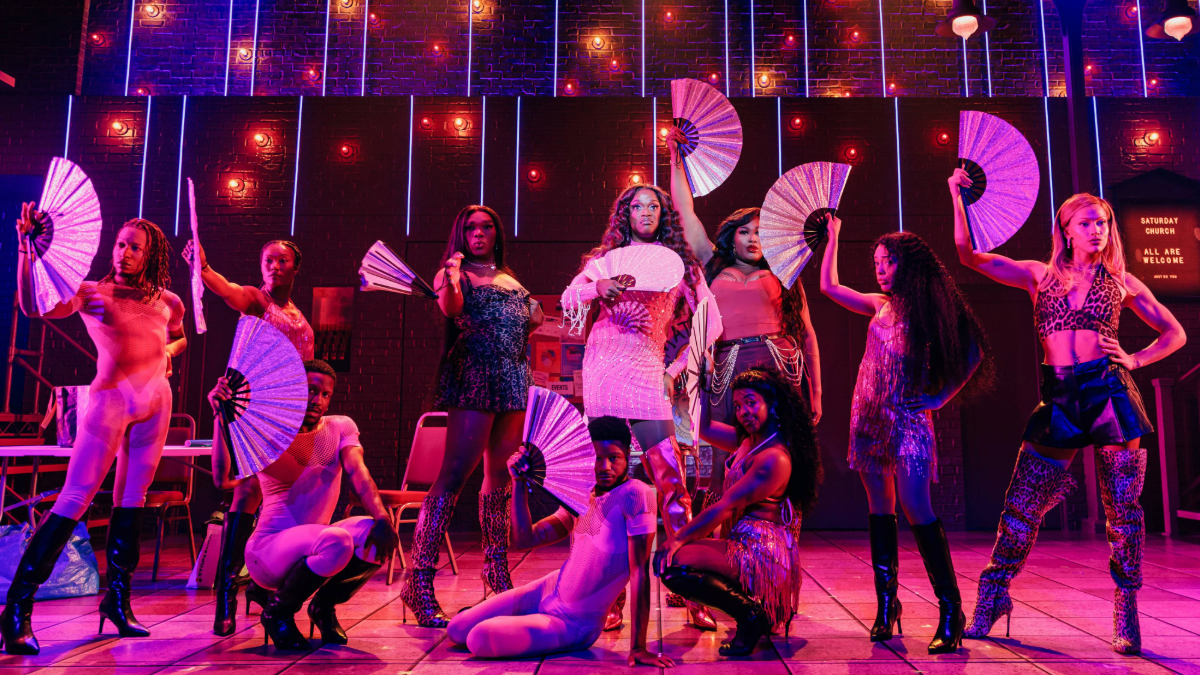
There, he meets an alternative chosen family that is immediately accepting, led by a ballroom house mother named Ebony (played with no-nonsense spunk by the gifted B Noel Thomas) and her two sassy sidekicks, Heaven (Anania) and Dijon (Caleb Quezon). They encourage his desire to try on makeup and heels, as well as to explore a budding romance with that boy from the subway, Raymond (the winsomely adorable Jackson Kanawha Perry), who’s patient with the virginal Ulysses despite his penchant for hustling to make ends meet.
Ulysses also has another unexpected mentor: a fantastical vision known as Black Jesus (Ghee again, this time in full bedazzled glory) who pops up frequently as narrator, fairy godmother, and fan-wielding mistress of ceremonies for choreographer Darrell Grand Moultrie’s biggest, bounciest musical numbers. Ghee, a Tony winner for Some Like It Hot, brings a swagger to their catwalk that’s truly remarkable — assisted by the couture-worthy costumes of Qween Jean and Dhairius Thomas’ wigs. As the actor quips at one point, “You think I’m gonna run the universe in a pair of blocky wedges? No ma’am.”
While the score is full of bangers, and the musical routines consistently impress with the eye-popping work of set designer David Zinn, sound designer Gareth Owen, and lighting specialist Adam Honoré, they frequently stop the story in its tracks. That’s a problem because all too often Cardasis and Ijames’ book scenes are a messy mix of underdeveloped characters and contradictory storylines.
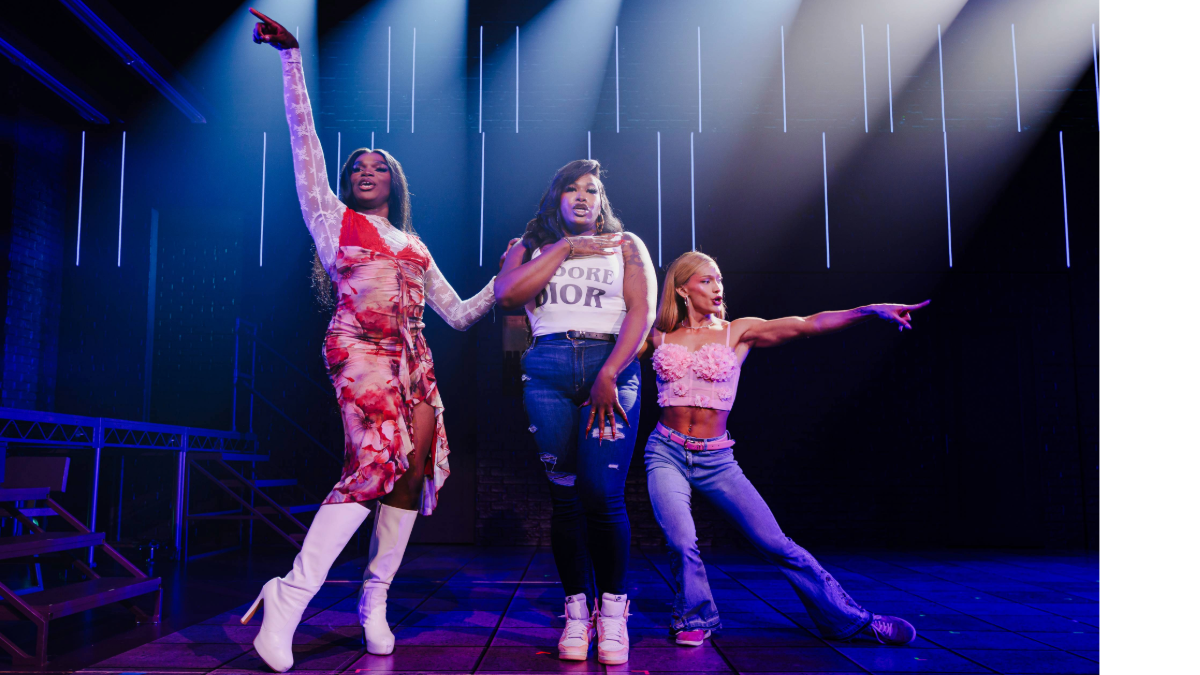
The overlong first act sets up a lot of ideas that are never satisfactorily explained or resolved. Ebony is introduced as a parallel story to Ulysses since she’s also mourning a recent death (a partner/mentor who died by suicide after her family rejected her) — but she disappears for long stretches of the story. She also claims to have quit organizing Saturday Church but continues to show up at every single meeting. More puzzling is the outsize role of Kalukango’s Aunt Rose, who mourns her late brother more visibly than his widow and spends an improbable amount of time as a surrogate parent to Ulysses (in the movie, Ulysses had a younger brother who needed more supervision). The Tony winner makes the most of the role’s gospel-tinged solos, with remarkable vocal runs, but the script repeatedly asks her to hit just a single note as an intolerant church lady.
The second act, too, features scenes that fly by so quickly that it’s difficult to register the weight of what’s happening: Ulysses runs away from home, never once contemplates seeking refuge at that church center in the Village, and has a sketchy encounter in the apartment of a much older man — a horrific turn of events that is never again addressed, either in conversation or in song. In fact, where is Ulysses’ 11 o’clock number where he grapples with all that’s happened to him and what it means to be on the other side of the closet — standing even taller than before, thanks to his newly broken-in heels?
Director Whitney White’s production has an infectious energy and a visual polish that suggest it’s almost ready to sashay its way uptown. While the story beats border on the cliché, Ulysses’ departs from most gay protagonists in wanting to both explore his identity in the LGBTQ community while also lifting his voice in a Christian church that has sustained the Black community for generations. (In another missed opportunity for the show, we never truly see him integrating these two ambitions.) In its current form, Saturday Night offers a whole lot to enjoy — but there’s a tighter, tauter, more emotionally resonant hit waiting to pulled out of this material and reach a bigger congregation. ★★★★☆
SATURDAY CHURCH
New York Theatre Workshop, Off Broadway
Running time: 2 hours, 20 minutes (with 1 intermission)
Tickets on sale through October 19 for $63 to $149
 Culture Sauce