
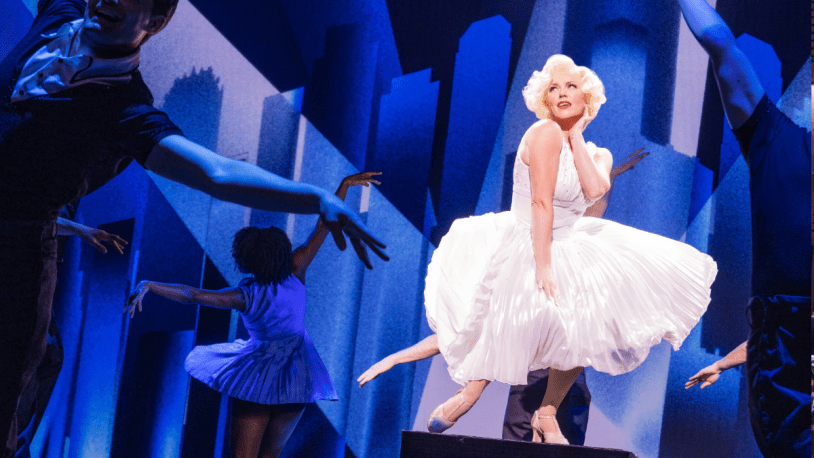
The first episode of Smash — a backstage look at the making of a Broadway biomusical about Marilyn Monroe — was one of the most perfect TV pilots produced in the new millennium. Playwright Teresa Rebeck, who created the show in 2012, offered a savvy blend of inside-theater references and conventional soap opera plotting while also showcasing memorable production numbers. And composer-lyricist Marc Shaiman and lyricist Scott Wittman crafted some memorably bouncy and witty tunes that consistently worked on two levels, reflecting both episodes in Marilyn’s life as well as tensions among the creatives scrambling to assemble a coherent version of her story on stage. The rest of the show’s two-season run was notoriously bumpy, though it elevated the profiles of stars like Megan Hilty, Leslie Odom Jr., Jeremy Jordan, and Katharine McPhee while providing noteworthy cameos for stage legends like Bernadette Peters and Daphne Rubin-Vega. The whole thing had the appeal of Glee for grown-ups.
It’s no wonder that Smash developed a rabid cult following among the theater crowd, many of whom fantasized about turning the series into a real-life Broadway musical. Specifically, a fully mounted version of Bombshell, the Marilyn show-within-a-show for which Shaiman and Wittman had penned so many story-songs performed in various stages of rehearsal and performance on the show. TV cameras always turned away before we got to the book scenes, which may explain why Bombshell has never come to fruition outside of the occasional special concert version. As the characters point out in the pilot, there’s also the sad legacy of two real-life biomusicals about Marilyn that flopped in the mid-1980s: a London production by Mort Garson and Jacques Wilson that played 156 performances and a Broadway show with a book by Patricia Michaels and a score by a committee of five that closed after 17 performances. No one is looking to do another Spider-Man musical anytime soon either.
What absolutely nobody was asking for was the abomination that just opened at the Imperial Theatre as Smash, a polished dud that unfolds like a jukebox musical recycling the best of Shaiman and Wittman’s catchy tunes from the series with a brand-new book (by Bob Martin and Rick Elice) that’s only loosely connected to its characters — or to any semblance of reality as we know it. (Rebeck’s contributions are reduced to a “based on the series created by” credit in the Playbill printed in type small enough that even Gen Zers might need reading glasses to make it out.)
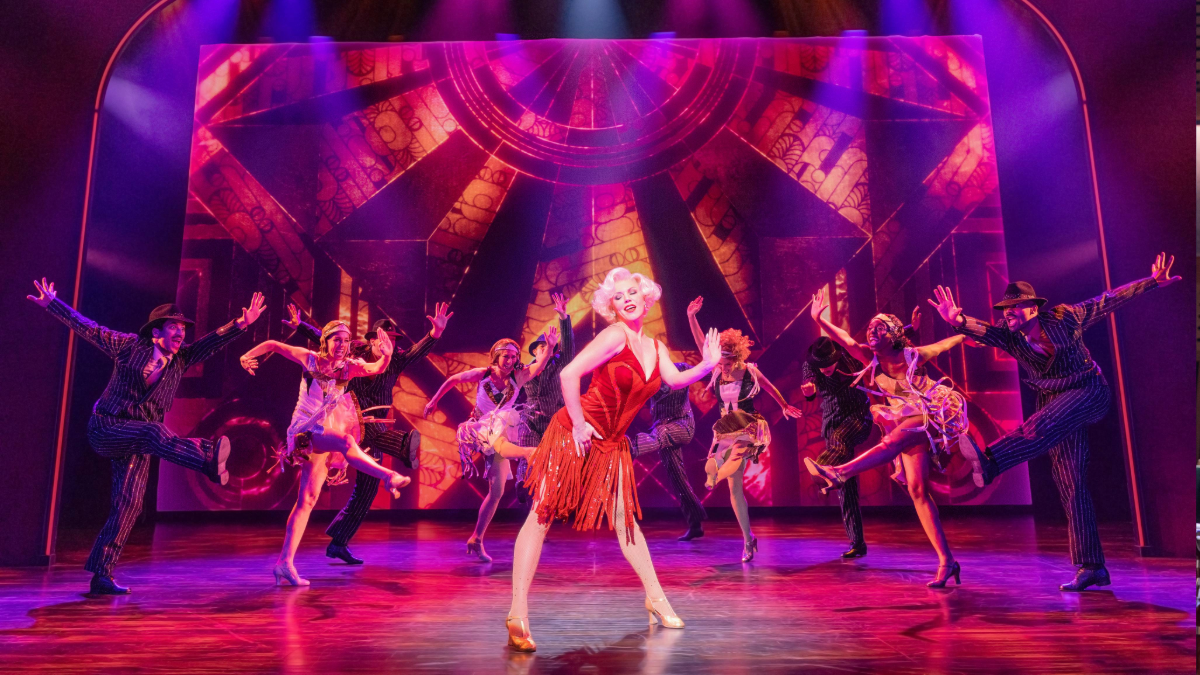
In this version, Smash‘s competing female stars are the only characters to survive the jump from screen to stage with their names intact: Ivy Lynn (Robyn Hurder) is now an established Broadway star who’s already been cast as Marilyn, while Karen (Caroline Bowman) is her longtime understudy across multiple shows who’s tired of languishing in the shadows. But there’s no hint of a real rivalry between them — at least until Ivy for some reason hires an eccentric Paula Strasberg-style acting coach who claims to have worked with Marilyn (Kristine Nielsen, looking like a cross between a bizarro-world nun and Igor from Young Frankenstein). This coach, named Susan Proctor, urges her pupil to go full Method, and soon Ivy Lynn is demanding to be called “Marilyn” at all times, stopping scenes after each line for consultations on motivation, and eventually no-showing at rehearsals. Martin and Elice further gild the All About Eve lily by looping in another potential challenger: the show’s assistant director, Chloe (Bella Coppola), a triple threat who’s been in six Broadway ensembles but is repeatedly told she doesn’t “look the part” of a principal and so is pivoting to a behind-the-scenes career. This set-up gives all three actresses well-deserved moments to belt a ballad downstage center, and they each deliver wonderfully.
The book, much like Martin’s work on the just-opened Boop, is overstuffed with characters and subplots that defy any attempt to draw a tangible narrative throughline between the splashy production numbers. Aside from Ivy Lynn and Karen, the rest of the cast is nominally new: The series’s skeevy director is now a swishy gay man (Brooks Ashmanskas, a campy treat) who hits on a chorus boy instead of Karen and drops bitchy asides like a snarky Red Riding Hood leaving bread crumbs on the way to grandmother’s house. (“I was Joseph Papp’s associate on Hamlet in the park,” he snippily tells Chloe when she suggests a different approach to a scene. “So when you’ve pried a raccoon off Kevin Kline’s face, then you can give me directing tips.”) The show’s writers are now a husband-and-wife duo (played by John Behlmann and Smash Season 2 alum Krysta Rodriguez), while the producer is still a wealthy, sable-wearing grande dame (Jacqueline B. Arnold) with a nepo-baby assistant (Nicholas Matos) who knows more about social media than Broadway.
The problem is that all of them have been saddled with convoluted subplots that are conveyed almost entirely in the jokey book scenes. Unlike a traditional musical, where you might expect the characters to deliver a diagetic song that would flesh out their motivation or advance the plot, here the songs are inserted as interstitial moments that are almost entirely about themselves, or presenting another routine from the fictional Bombshell.
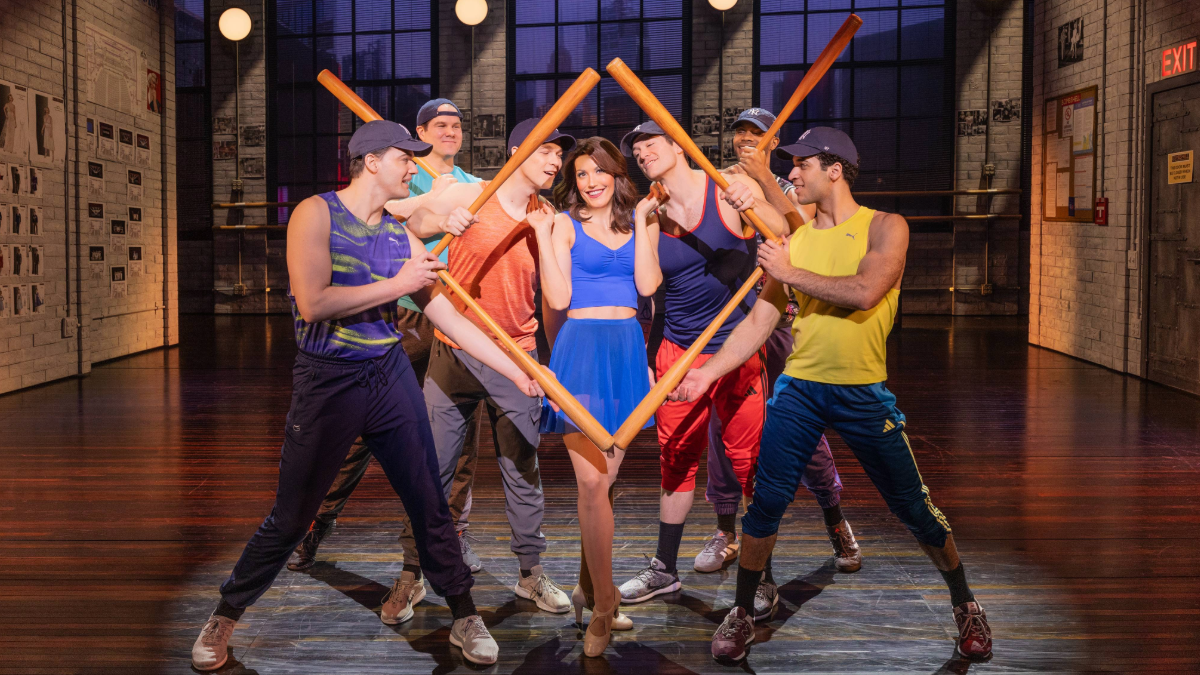
The numbers are terrific, and the hard-working ensemble performs Joshua Bergasse’s athletic choreography (much of it reproduced verbatim from his work on the TV show) with enviably sharp precision. Indeed, the whole physical production is impressive, and looks like it cost a fortune — from Beowulf Boritt’s multi-locale set design to Ken Billington’s lighting to Alejo Vietti’s glitter-forward costumes (the whole cast even gets an outfit change for the curtain call). But many of the songs are cut short just as they are beginning to achieve liftoff — and then it’s back to those clunky book scenes. Behlmann’s composer, Jerry, even underscores the problem in an exasperated rant: “No one wants to hear people talking in a musical! It’s boring! Words are boring! I’m boring myself right now!” Amen, brother.
While there are plenty of laughs and semi-insider jokes for theater fans (waiters bring head shots with drinks orders at a Sardi’s-like bar, Julie Andrews joins online influencers in dissing the show’s troubles), there’s something tonally off throughout the production that even director Susan Stroman’s quick pacing can’t dispel. In 2025, there’s nothing funny about a frustrated Jerry becoming an alcoholic before our eyes, swigging from flasks morning and night and making drunken recordings to create lame plot complications. How is that amusing? Worse, Nielsen’s Susan Proctor repeatedly plies Ivy Lynn with Benzedrine pills — you know, just like the amphetamines that led to the real Marilyn’s death by overdose in 1962. (Both of the show’s addicts seem to kick their habits by the final curtain without apparent difficulty or consequences.)
Ivy Lynn’s whole arc is troubling in a WTF way. She goes from Broadway sweetheart to uber-bitchy Method monster and then back again without any credible explanation. If you’re going to subject your female lead to this off-putting pill-popping journey, in a supposed comedy no less, then you ought to hand her some solos where she can explain her inner thoughts. The series even had a song, “Dig Deep,” that might have helped here since it explored Marilyn’s desire to work with the Actor’s Studio: “I’ll finally get to use my mind’s interior, and not only just my bust, and my posterior,” went one lyric. Inserting that in Act 1 could have drawn out the parallels between Ivy and Marilyn, rationalizing what led them both astray. Here, though, we get two throwaway, non-contextual lines of “Dig Deep” when Ivy Lynn is already in full harpy mode, and it’s really just a bridge after the Act 2 opener: a zippy number called “Let’s Be Bad” where the chorus are dressed as flappers and gangsters for reasons that are never explained. (We’re left to guess how this number fits into Marilyn’s life or to Ivy Lynn’s evolution.)
Hurder is a legitimate triple threat, and she aces her numbers with a crystalline belt and a high-kicking energy that’s astonishing. But there’s little she can do with a character whose personality is as changeable as her many, many costumes. And that’s the real disappointment of Smash. So much talent and so much promising raw material is squandered in the service of a story whose dark humor turns caustic and distasteful. ★★☆☆☆
SMASH
Imperial Theatre, Broadway
Running time: 2 hours, 35 minutes (with 1 intermission)
Tickets on sale through January 4 for $55 to $329
 Culture Sauce